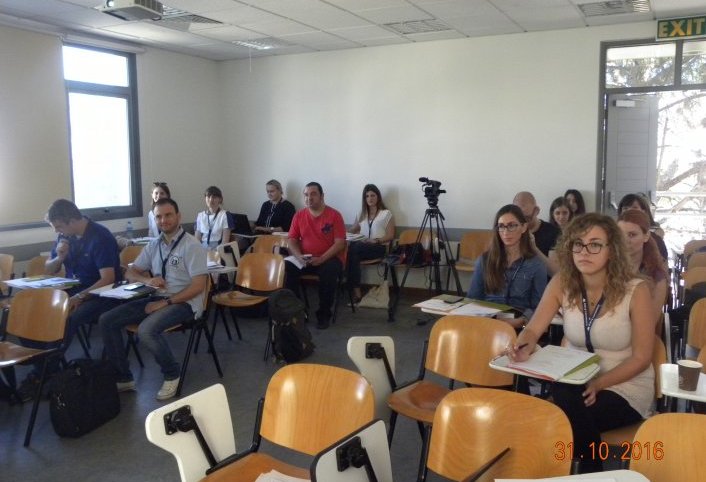
Eye-Tracking Use for Reading Research
Aims
The main objective was to gather a group of about 20 to 25 ESRs who are interested in knowing how to design and carry out experiments in word reading and reading comprehension using eye-tracking technology.
The main objectives of this Training School included the following:
An overview of eye movements and eye-tracking technologies, followed by examples of how they are used to study reading processes and discussions on the eye-reading relationship
Introduction to the methodology and issues associated with eye-tracking applications in word reading and reading comprehension research
Detailed instruction on software capability and functionality, addressing a number of practical issues in starting eye-tracking research
Principles of eye-tracking study design, and best practices and advice for data collection
Presentation covering technical aspects of the eye tracker, participant setup, and the use of the tracker software for generating experiments (Experiment Builder)
Detailed instruction on data analysis, including the use of data visualisation/analysis software (DataViewer)
Sample scripts and practice data
Where
Centre for Applied Neuroscience (CAN), Faculty of Social Sciences and Education, in collaboration with the Department of Psychology, University of Cyprus (UCY)
Organizers
Timothy C. Papadopoulos and Irene-Anna Diakidoy
Trainers
Timothy C. Papadopoulos (University of Cyprus) Specialised in the study of learning disabilities and their treatment
Irene-Anna Diakidoy (University of Turku) Specialised in the study of reading development, reading comprehension and learning from text
Tuomo Häikiö (University of Turku) Specialized in the study of reading development, and the study of word and text processing among elementary school children
Christoforos Christoforou (Center for Applied Neuroscience) Specialised on computational methods for neruoscience, EEG, analysis, Brain Computer Interfaces and Information Technology
Sam Hutton (Sussex University) Specialised in high speed, high resolution, and eye-tracking equipment
Argyro Fella (University of Cyprus) Carrying out experiments with the EyeLink 1000
Program
Monday, october 31
09h30 – 10h15 | Registration and coffee
10h15 – 10h30 | Welcome
10h30 – 11h30 | Eye-tracking and (word) reading research
11h30 – 12h30 | Eye-tracking and reading comprehension
12h30 – 14h00 | Lunch
14h00 – 15h00 | Introduction to the software for generating experiments (Experiment Builder)
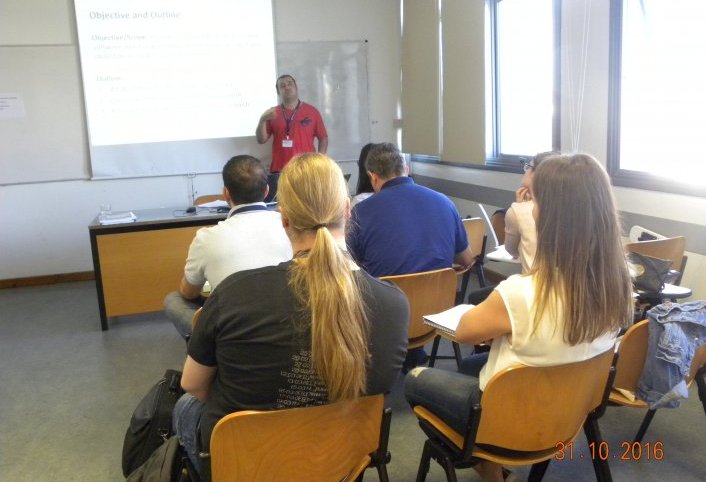
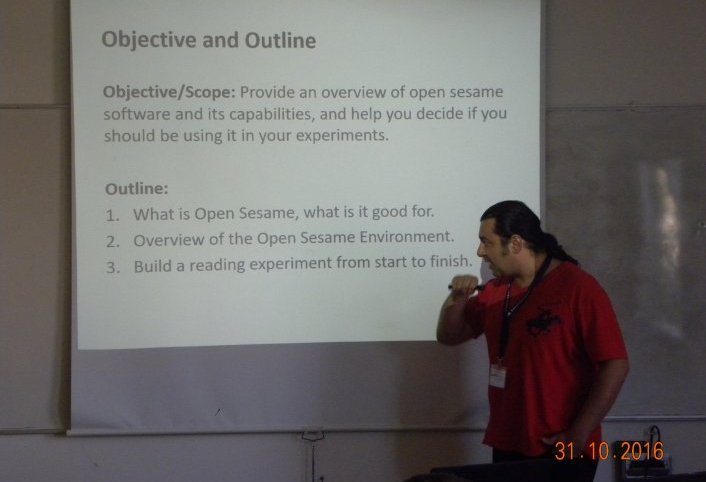
15h00 – 16h00 | Introduction to the software for generating experiments (OpenSesame)
16h00 – 17h00 | Refreshments
16h30 – 18h00 | Introduction to data analysis software (DataViewer)
Tuesday, november 1
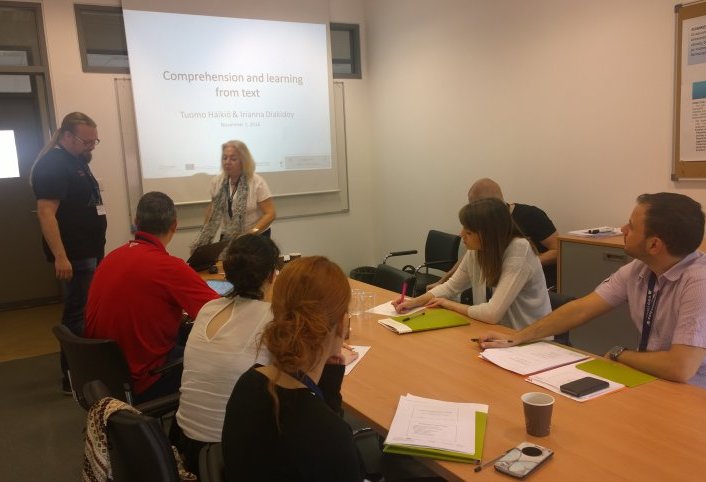
09h30 – 10h30 | Presentation covering technical aspects of the eye tracker, participant setup, and the use of the tracker software – Group 1 / Comprehension and learning from text through eye-tracking – Group 2
10h30 – 11h30 | Presentation covering technical aspects of the eye tracker, participant setup, and the use of the tracker software – Group 2 / Comprehension and learning from text through eye-tracking – Group 1
11h30 – 12h30 | Hands-on practice with the eye-tracker – Group 1 / From eye-gaze recognition and reading: RAN, word reading and ortographic processing – Group 2
12h30 – 14h00 | Lunch
14h00 – 15h00 | Hands-on practice with the eye-tracker – Group 2 / From eye-gaze recognition and reading: RAN, word reading and ortographic processing – Group 1
15h00 – 16h00 | Questions and discuss paradigms
16h00 – 16h30 | Refreshments
19h00 | Training School Dinner
Wednesday, november 2
09h30 – 12h30 | From the Experiment to the Result file: How to analyze your data
10h15 – 10h30 | Welcome
12h30 – 14h00 | Lunch
14h00 – 15h00 | Q&A session
15h00 – 16h00 | Training School adjourns