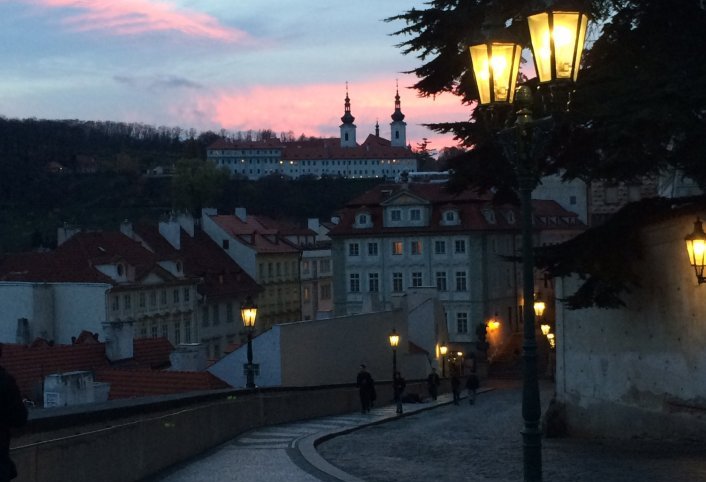
ELN Inaugural Conference, Prague
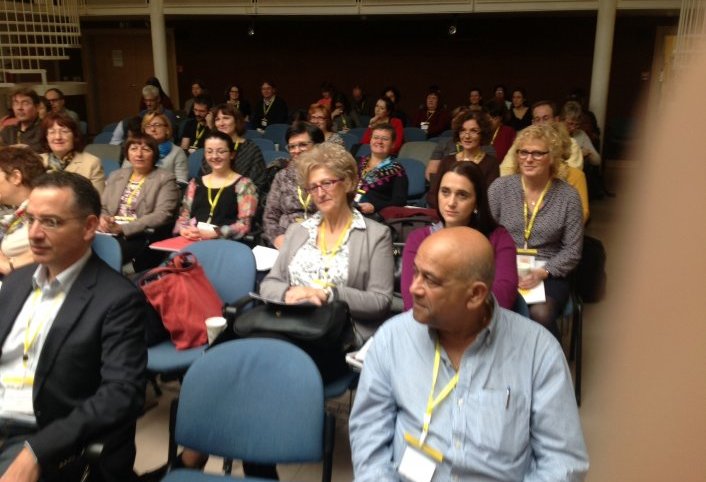
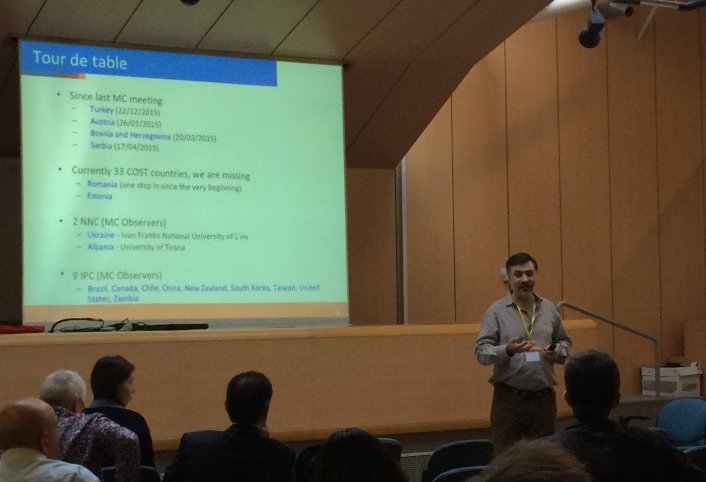
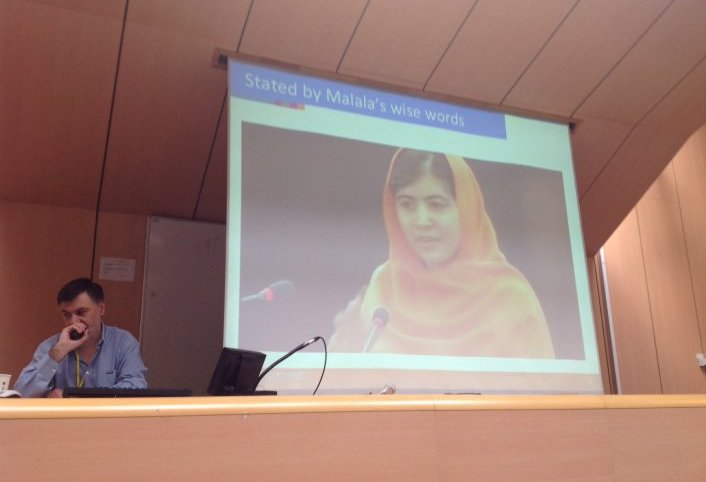
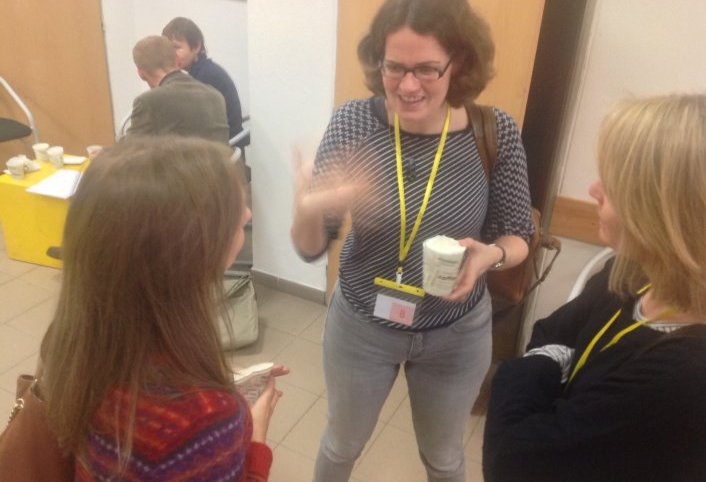
The ELN Inaugural Conference was held at Charles University (Prague) from the 7th to the 8th of November, 2015. Gabriela Malkova was the conference local organizer. The conference was a two-day event with Working Groups Symposia, Interactive Sessions, and Roundtables, it was open to ELN members as well as to other researchers, stakeholders, and general public.
Keynote Speakers
Malt Joshi
Texas A&M University, United States

Karin Landerl
University of Graz, Austria
Charles Bazerman
University of California, United States
Ulla Richardson
University of Jyväskylä, Finland
R. Malatesha Joshi, Ph.D., is Professor of Reading/Language Arts Education, ESL and Educational Psychology at Texas A&M University, where he teaches and conducts research in literacy development and literacy problems among monolinguals and bilinguals in different orthographies. Dr. Joshi is the Editor of Reading and Writing: An Interdisciplinary Journal and the monograph series titled Literacy Studies: Perspectives from Cognitive Neurosciences, Linguistics, Psychology and Education. From 1980-2002, Joshi directed seven highly successful NATO Advanced Study Institutes which helped to bring various fields together to study literacy. He has published numerous books and scientific papers and has received several awards, such as Erasmus Mundus Visiting Scholar, Germany, and Beijing Normal University, China. He has received several grants and also has served on the review panels for Institute of Educational Sciences as well as the National Institute for Child Health and Human Development.
During and after her PhD from the University of Salzburg, Karin Landerl was a visiting fellow at the MRC Cognitive Development Unit, London, the UCL Centre of Cognitive Neuroscience, London, the Paedologisch Instituut at the Free University Amsterdam and the Centre for Reading and Language at the University of York and was Prof. of Developmental Psychology at the University of Tuebingen, Germany, from 2006-2010. Currently, she is Professor of Developmental Psychology at the University of Graz, Austria, and is Chief Editor of Scientific Studies of Reading. Her main research interests are the neuro-cognitive mechanisms of typical and atypical reading acquisition in different orthographies and the comorbidity of dyslexia and dyscalculia.
Charles Bazerman is a Professor in the Department of Education at the University of California, Santa Barbara. Professor Bazerman is interested in the practice and teaching of writing, understood in a socio-historic context. Using socially based theories of genre, activity system, interaction, intertextuality, and cognitive development, he investigates the history of scientific writing, other forms of writing used in advancing technological projects, and the relation of writing to the development of disciplines of knowledge. He is the author of over 15 books, and over 20 edited collections including: Traditions of Writing Research, Genre in a Changing World, Textual Dynamics of the Profession, Writing Selves/Writing Societies, What Writing Does and How it Does It, and the Handbook of Research on Writing. His recent books are A Rhetoric of Literate Action and A Theory of Literate Action. He hopes to support the aggregation and dissemination of all the knowledge his colleagues have gained about the power and potential of writing.
Dr Ulla Richardson, Professor of Technology-Enhanced Language Learning at the Agora Center, University of Jyväskylä, and Adjunct Professor of Experimental Psycholinguistics and Research on Speech Sciences, Department of Languages, University of Jyväskylä. She is the head of the GraphoGame unit and the head of the Secretariat of GraphoWORLD Network of Excellence. Her current research examines reading and language development, phonology, speech processing, and specifically evidence-based reading intervention in different orthographies.
Day 1, November 7
08h30 | Registration & Coffee
09h30 | Opening cerimony
09h50 | What is the ELN? Chair address, Rui A. Alves, University of Porto
10h20 | Cognitive Component of Componential Model of Reading (CMR) in Different Ortographies. Opening Keynote, R. Malatesha Joshi, Texas A&M University
11h00 | Coffee Break
11h30 | WG1 Symposium. Chair: Julie Dockrell
Reading in different languages. Keynote speaker: Karin Landerl, University of Graz
Methodological issues in cross-linguistic research on reading development. Timothy Papadopoulos
Multilingualism + multi orthography = multi literacy: not a simple equation. Rhona Winifred Stainthorp
Multilingualism and literacy education in Europe: unifying research-informed effective pedagogies or a fragmenting landscape? Charles Mifsud
13h00 | Lunch
14h30 | WG2 Symposium. Chair: Mira Bekar
Imagining true longitudinal lifespan reading and writing studies. Keynote Speaker: Charles Bazerman, University of California, Santa Barbara
15h15 | Presentation of team’s workplan
Academic literacies team. Bojana Petric
Digital literacy team. Luís Pereira
Multilingual literacy team. Eva Lindgren
16h00 | Coffee Break
16h30 | WG3 Symposium. Chair: Thierry Olive
A gitial environment, GraphoGame, for supporting early reading skills in different ortographies. Keynote speaker: Ulla Richardson, University of Jyväskylä
Writing and notetaking at the university: Practices and effects of digital technology. Marie-Laure Barbier, Justine Renaud and Thomas Arciszewski
Relationships between writing processes, dicovery through writing and text quality. David Galbraith and Veerle Baaijen
The value of developmental corpora for researching language acquisition. Spela Arhar Holdt
19h00 | Conference dinner
Day 2, November 8
08h30 | Registration & Coffee
09h30 | Parallel Roundtables
1) Roundtable on Recent trends in Bachelor’s dissertation/thesis research: Foci, methods, approaches. Panel of 5 speakers. Bojana Petric, Introduction to the panel; Montserrat Castelló, Helping students to develop voice and authorial identity in writing their dissertations/theses; Natalie Schembri,Textual voice and overall success in citation: Some data from six Maltese undergraduate dissertations in Education; Mira Bekar, Logical fallacies and student voice in academic L2 writing: Towards dissertation writing; Savka Blagojevic, The relation between students’ bibliographies and the writing styles they use in their Bachelor’s theses (pdf); Madalina Chitez, Linguistic support in “Thesis Writer”: Corpus-based academic phraseology in English and German (pdf); Karl-Heinz Pogner,The interplay of project manuals, Bachelor projects and theses; academic literacies and peripheral participating (pdf). Discussion and comments from the invited expert (Prof Charles Bazerman, US)
2) Roundtable on Digital Literacy, chaired by Luís Pereira and Maria José Brites. Planning and discussion of digital literacy team’s work plan. Skype working session – Martine Smith, Luís Pereira, Manuel Perea and Maria Brites.
3) Roundtable on Multilingual Literacy, chaired by Eva Lindgren. Planning and discussion of multilingual literacy team’s work plan. Eva Lindgren, Introduction; Esther Breuer, Liana Konstantinidou and Rachael Agius, Important issues in multilingual literacy. Presentation and discussion of suggested themes and teams and how to move on from here.
4) Roundtable on ELN’s publication strategy, chaired by David Galbraith and R. Malatesha Joshi. Preparation for the International Handbook of Literacy: Preliminary Thoughts.
5) Roundtable on Evidence Synthesis, chaired by Marcin Szczerbinski. Effective sharing of effective practice: Can we improve policy and practice through best evidence synthesis, and its user-friendly communication?
11h00 | Coffee Break
11h15 | Interactive session 1a. Chair: Gabriela Malkova
Publishing in English: The experiences of scholars from Bosnia and Herzegovina. Alma Jahic
Academic writing in Spanish and Albanian: a contrastive experience. Emilio Gallardo Saborido, Anastasi Prodani and Edlira Gabili
Genres of undergraduate writing in Ukrainian universities. Tatyana Yakhontova
The challenges of writing the Master Thesis. Maria João Couto and Karl-Heinz Pogner
From writing to “texting”: Academic text production under the conditions of multilingualism (Lx). Karl-Heinz Pogner and Dagmar Knorr
Literacy Policy Documents And Perspetives: Croatia as a Case Study. Anita Peti-Stantic
Multilingual literacy in minority and indigenous contexts. Eva Lindgren
Assessing Writing in Vocational Education and Training Schools: Results from an Intervention Study. Lianna Konstantinidou, Joachim Hoefele and Otto Kruse
Media education contests: promoting digital literacy in a non-formal context. Luís Pereira, Ana Jorge and Maria José Brites
Interactive session 1b. Chair: Marie Van Reybroeck
The development of a literacy diagnostic assessment battery for Maltese children. Rachael Agius
Development of Turkish Reading Achievement Tests. Nalan Babür, Gulcan Erçetin and Belma Haznedar
The cognitive profile of Portuguese adults and children with dyslexia: where are the differences? Luís Faísca, Maria São Luís Castro and Alexandra Reis
Web-Based Intelligent Tutring System Delivers Powerful Reading Comprehension Strategy to Children in Grades 4 through 12. Kausalai Wijekumar, Bonnie Meyer and Puria Lei
Development of a reading software to improve reading fluency and reading comprehension skills of students with/or at risk of learning disabilities and evaluation of its effectiveness. Orhan Cakiroglu
HandSpy: a web tool for managing experiments on cognitive processes in writing. José Paulo Leal
Can colors help reading text in the digital world? Ana Marcet, Pilar Tejero and Manuel Perea
Digital literacy and social participation: Opportunities and challenges for people who use augmentative and alternative communication. M. Smith, P. Raghavendra and S. Rowland
“My Literacies” Children’s views on literacy practices in multilingual and multimedia contexts. Nadja Kerschhofer-Puhalo and Werner Mayer
13h30 | Lunch
14h30 | MC Meeting
16h00 | Coffee Break
16h30 | MC Meeting