WG1 + WG2 Workshop, Jyväskylä
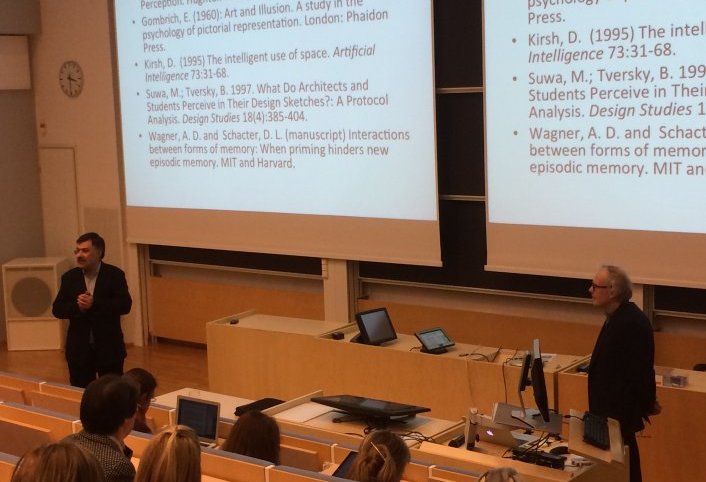
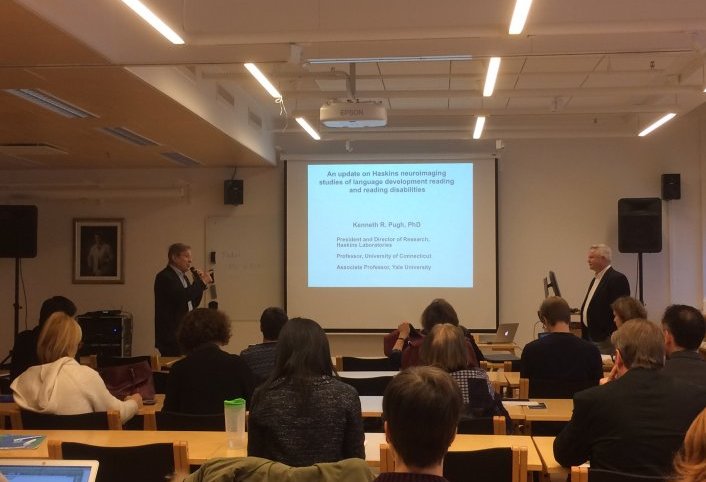
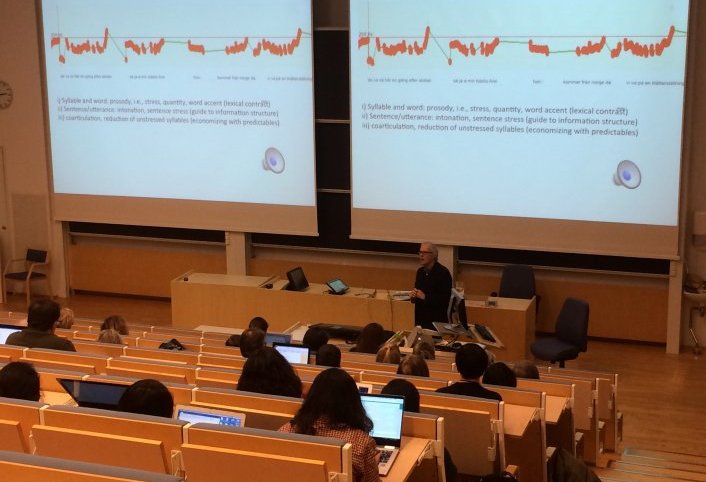
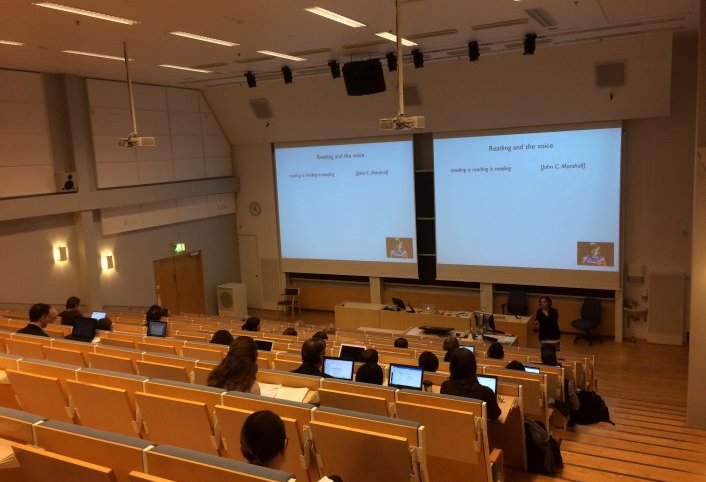
ELN WGs 1 and 2 met in Jyväskylä to coordinate and advance their joint projects and activities from 2nd to 3rd of February.
University of Jyväskylä
The meeting took place in the Agora building at the University’s Mattilanniemi Campus (the street address Mattilanniemi 2, Jyväskylä). The venue is located approx. 1 km from the Jyväskylä city centre.
The University of Jyväskylä is a multidisciplinary university, evolved from the first Finnish Teacher College established in 1863. At present, the University plays a very active role in many scientific fields both nationally and internationally. Human, nature, and technology form the key elements of the multidisciplinary scientific profile of the University. There are nearly 16 000 Finnish degree students, as well as exchange students from some 70 universities abroad. The University has research collaborators in numerous universities all over the world.
Organizers
Rhona Stainthorp (University of Reading, United Kingdom)
Stephanie Gottwald (Tufts University, United States)
Heikki Lyytinen (University of Jyväskylä, Finland)
Day 1 – February 2
09h30 | MC Meeting
13h00 | Lunch
14h30 | Plenary session
From thinking for speaking to thinking for writing. Invited speaker: Sven Strömquist (University or Lund)
Working Groups Parallel Meetings
15h00 | Working Group 1
Workshop: Analysing spelling errors: Ortography matters. Rhonda Stainthorp
17h00 | Coffee break
17h30 | Workshop continues
15h00 | Working Group 2
Individual team meetings discussing current work. Academic writing team: A guided session/mini workshop on Journey Plots Data Analysis Methods. Bojana Petric and Mira Beira.
17h00 | Coffee break
17h30 | A guided discussion on data analysis methods and hands-on activities. Bojana Petric, Christiane K. Donahue and Montserrat Castelló Badia.
Day 2 – February 3
09h30 |Time to stop playing Humpty Dumpty. Rhona Stainthorp (University of Reading)
10h30 | Literacy acquisition in Finish: What do we know and where to go next? Mikko Aro and Marja-Kristiina Lerkkanen (University of Jyväskylä)
11h00 | Coffee Break
11h30 | Reading assessment and intervention: New research approach in early ages and early disabilities. Celestino Rodríguez (University of Oviedo)
12h00 | Voice identity recognition in native vs non-native language and dyslexia. São Luís Castro (University of Porto).
12h30 | The non-trivial emergence of visual expertise for print. Dénes Toth (Brain Imaging Center of the Hungarian Academy of Sciences)
13h00 | Cognitive and language profiles of Slovak children with dyslexia based on criteria of selection. Marina Mikulajová (Comenius University)
13h30 | Lunch
14h30 | Personalized Literacy Instruction via Mobile Deives: From Letters to Deep Reading. Stephanie Gottwald (Center for Reading and Literacy Tufts University)
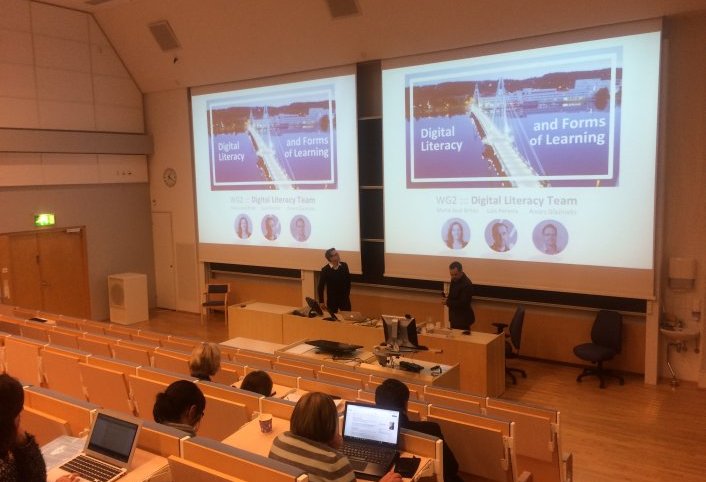
15h45 | Digital Literacy and forms of learning. Team Digital Literacy – Luís Pereira, Aivars Glaznieks, Maria José Brites.
16h05 | Dissertation/thesis writing across Europe: Exploring student writers’ experiences. Team Academic Writing – Bojana Petric and Mira Bekar.
16h25 | Setting up a multilingual literacy project. Team Multilingual Literacy – Esther Breuer.
16h45 | Combinatorial capabilities of a skilled reader (to be developed). Team Development of Reader/Wirter – Anita Peti-Stantic
17h00 | Coffee Break
17h30 | Discussion and wrapping up
Day 3 – February 4
09h30 | Brain foundations of the development of spoken and written language and those of the associated learning problem. Ken Pugh (University of Yale)
10h00 | Language development and the brain – A view from MEG studies. Tiina Parviainen (University of Jyväskylä)
10h30 | The development variety of children facing problems in the acquiition of reading skills. Minna Torppa (University of Jyväskylä)
11h00 | Coffee Break
11h30 | Neutral risk factors for dyslexia. Paavo Leppänen (University of Jyväskylä).
12h00 | Observations from the learning brain. Jarmo Hämäläinen (University of Jyväskylä)
12h30 | Supporting reading acquisition using GraphoGame technology. Ulla Richardson (University of Jyväskylä)
13h00 | Key facts we know about dyslexia, its early identification, prevention and treatment. Heikki Lyytinen (University of Jyväskylä)